

Stucco Replacement Cost: Reasons to Replace Stucco and Switch to Siding
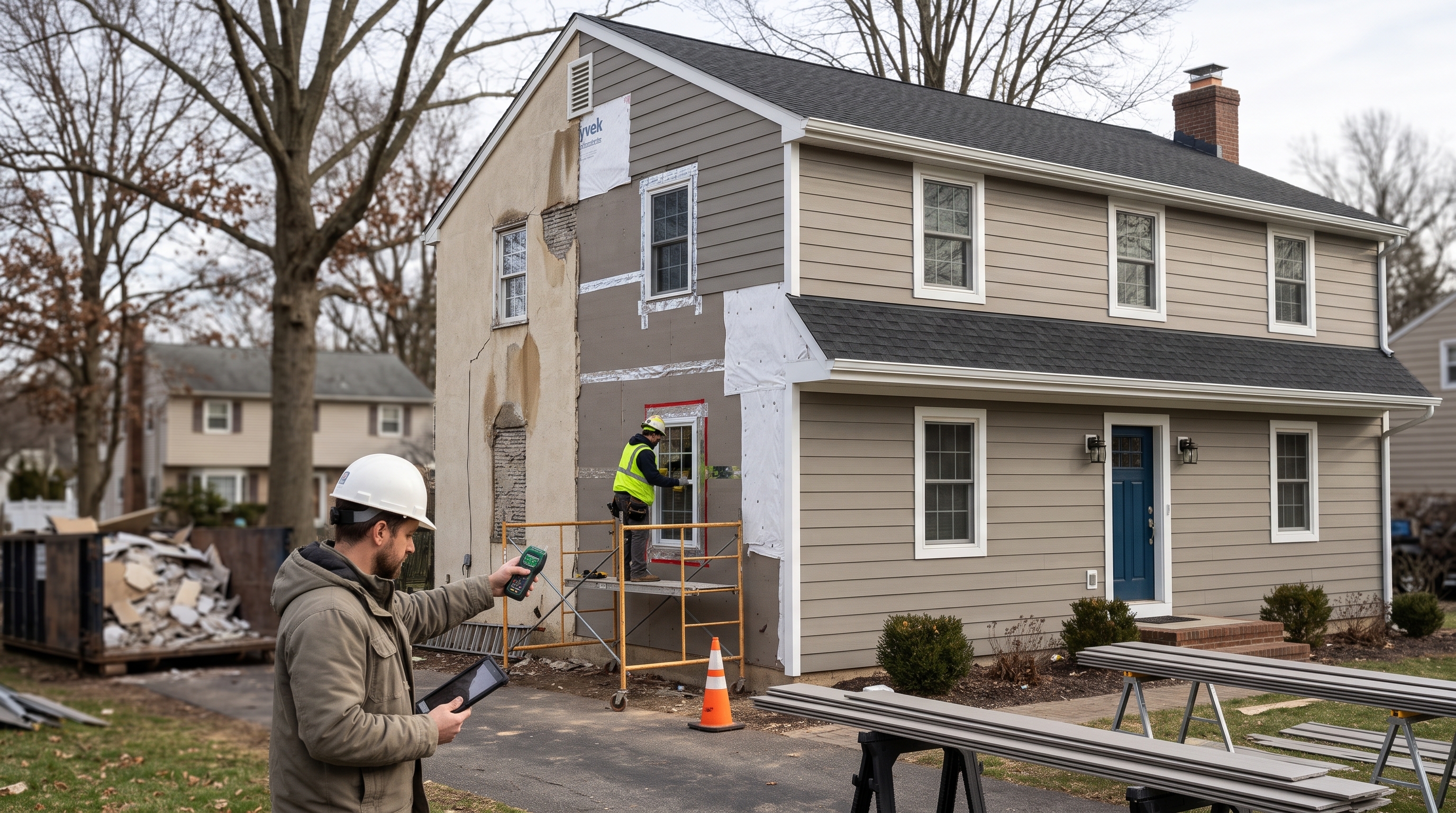

Replacing stucco with new siding typically runs about $9 to $22 per square foot of wall area, with vinyl at the lower end and fiber cement at the higher end. Removing stucco and reapplying new stucco usually runs about $12 to $20 per square foot. For a whole house, that often means tens of thousands of dollars, and hidden moisture damage behind the stucco is the biggest wildcard. These are planning ranges, not quotes. Material prices and labor rates change over time, so confirm with a written estimate for your home.
Why Homeowners Replace Stucco and Switch to Siding
Stucco is a durable cladding when it is installed correctly and maintained, and traditional hard coat stucco can last for many decades. But in Pennsylvania's climate of humid summers, cold winters, and repeated freeze and thaw cycles, stucco has weak points that lead many homeowners to replace it. These are the most common reasons.
1. Moisture and Hidden Water Damage
Stucco is porous. Cracks, failed sealant around windows and doors, and poor flashing let water in, and once water gets behind stucco it can stay trapped. The result can be rotted sheathing, damaged framing, and mold that you cannot see from the outside. Synthetic stucco, known as EIFS, installed without proper drainage in the 1990s and 2000s has a well documented history of this problem.
2. Recurring Cracks and Spalling
Hairline cracks are normal. Wider cracks, cracks that keep returning after repair, and sections where the finish flakes or falls off, called spalling, suggest the problem is bigger than a surface patch.
3. Repair Costs That Keep Adding Up
Patching stucco is hard to do invisibly. Matching the texture and color of an aged finish is difficult, so patches tend to show. When repairs become a regular expense, replacement often becomes the better long term value.
4. Ongoing Maintenance
Stucco needs periodic inspection, crack repair, sealing, and repainting. Siding, particularly vinyl and fiber cement, generally asks for far less upkeep.
5. Mold, Algae, and Staining
Shaded, damp walls are prone to green algae, mildew, and dark staining on stucco, and the porous surface makes it harder to clean.
6. Energy Efficiency
Traditional stucco adds little insulation. A new siding system can be installed with a modern weather barrier and, when desired, continuous insulation, which improves comfort and reduces air leakage.
7. Resale Concerns
In southeastern Pennsylvania, buyers and their inspectors often ask for a stucco moisture inspection. A failed result can delay a sale or reduce offers, which is a major reason owners replace stucco before listing.
8. Easier Repairs Down the Road
Individual siding panels or boards can be replaced without redoing a whole wall, which makes future repairs simpler and more predictable.
When Stucco Does Not Need to Be Replaced
Replacement is not always the answer. Stucco that is dry, firmly attached, and only has hairline cracks can often be maintained with sealing and minor repairs. A moisture inspection is the best way to know what is happening behind the surface before you decide.
Signs It May Be Time to Replace Your Stucco
- Cracks wider than a hairline, especially around windows, doors, and corners
- Stains running down from windows, rooflines, or corners
- Soft or spongy spots when the wall is probed
- Bubbling, blistering, or sections that sound hollow when tapped
- White, powdery deposits on the surface, called efflorescence
- Musty smells or water stains on interior walls near the stucco
- Rotted wood trim around windows and doors
- Moisture meter readings that are high in several areas
- Repairs that keep failing
Stucco Replacement Cost Breakdown
The numbers below are typical ranges for wall area, which is the total area of the exterior walls, not the floor area of your home. They cover materials and labor under typical conditions. The first table shows individual components and the second shows combined project costs.
Cost by Component, Per Square Foot of Wall Area
Typical Combined Cost, Per Square Foot of Wall Area
These combined ranges assume typical conditions without major hidden damage. They are narrower than the component ranges because they reflect common combinations rather than every possible extreme.
Whole House Stucco Replacement Cost by Project Size
Wall area is what drives the total. These examples use three common sizes to show how the numbers scale. Your installer will measure your home directly.
What Makes Stucco Replacement Cost More or Less?
Hidden moisture damage. This is the biggest variable. If wet sheathing or framing has to be repaired, costs rise quickly.
Type of stucco and what is underneath. Hard coat stucco over lath is labor intensive to remove. Stucco over brick or block adds complications, since siding then usually needs furring strips to create a flat, ventilated surface.
Siding material. Vinyl is the most economical, insulated vinyl costs somewhat more, and fiber cement such as James Hardie is the highest of the common choices, with the benefit of greater durability.
Number of stories and access. Taller homes need scaffolding and more labor.
Architectural details. Arches, quoins, bump outs, and decorative trim add time and material.
Windows, doors, and flashing. Properly integrating new flashing around every opening is essential to a lasting result and affects labor.
Insulation upgrades. Adding continuous insulation under the siding adds cost but improves performance.
Disposal. Stucco is heavy, and hauling it away is a real part of the budget.
Permits and local requirements. These vary by municipality.
Hidden and Often Overlooked Costs
- Moisture repairs. Set aside a contingency of roughly 10 to 20 percent of the project for surprises behind the stucco. If the walls are dry, you may not need it, but if they are not, it can save you from a scramble.
- Moisture inspection before work begins. A stucco moisture inspection typically costs a few hundred dollars and gives you real information for deciding between repair and replacement.
- Window and door trim replacement. Rotted trim is common around stucco openings.
- Gutters, downspouts, and flashing. Water management details often need updating at the same time.
- Painting or finishing. Fiber cement may be primed or pre finished, but touch ups and trim paint can add cost.
Repair, Replace, or Cover It? Comparing Your Options
Installing siding over existing stucco is possible in some cases using furring strips and proper flashing, and it saves the cost of demolition. But it is only appropriate when the stucco and the wall behind it are confirmed dry and sound. Covering a moisture problem hides it and can make it worse.
Choosing Your Replacement Siding
Vinyl siding is the budget friendly choice with low maintenance and a wide range of colors and profiles.
Insulated vinyl siding adds a foam backing that improves insulation and impact resistance for a moderate increase in cost.
Fiber cement siding is more durable, resists fire, pests, and moisture, and holds paint well. It is the highest in cost, with a strong reputation for longevity. For a direct comparison, see our guide to James Hardie fiber cement vs. premium vinyl siding.
Engineered wood siding offers a wood look with better moisture and pest resistance than natural wood.
The Long Term Cost View
The upfront price of replacing stucco is only part of the picture. Stucco brings recurring costs, including crack repair, sealing, repainting, and the risk of moisture repairs. Siding, especially vinyl and fiber cement, usually costs less to maintain over the years. For homeowners planning to stay in the home or preparing to sell, replacing a problem stucco exterior can reduce both future repair costs and the risk of a stalled sale.
How to Get an Accurate Stucco Replacement Estimate
- Get a moisture inspection first so the scope is based on facts rather than guesses.
- Have the walls measured in person instead of relying on a floor area estimate.
- Ask for an itemized estimate that separates removal, repairs, weather barrier, flashing, siding, trim, and disposal.
- Ask how hidden damage is handled, including how it is priced if it is found.
- Confirm the flashing and weather barrier details, since these determine how well the new wall sheds water.
- Compare materials so you can see the tradeoff between upfront cost and long term maintenance.
Frequently Asked Questions
How much does it cost to replace stucco with siding? Typically about $9 to $22 per square foot of wall area, depending on the siding material. For a medium sized home, that often means a total in the range of $22,500 to $55,000, with hidden damage and home complexity affecting the final number.
Is it cheaper to repair or replace stucco? Repair is cheaper when the stucco is dry and the problems are localized. If there is widespread cracking or moisture, repairs tend to fail and replacement becomes the better value.
Can you put siding over stucco? Sometimes, using furring strips and proper flashing, but only if the stucco and wall behind it are dry and sound. If moisture is present, removing the stucco is the safer choice.
Does replacing stucco with siding increase home value? It can help, especially if buyers in your area are concerned about stucco moisture. New siding improves curb appearance, lowers maintenance, and can remove a common inspection concern.
How long does stucco removal and siding installation take? It depends on the size and complexity of the home and on what is found behind the stucco. Many projects take a couple of weeks, and larger or more complicated jobs take longer.
Do I need a permit to replace stucco with siding? Requirements vary by municipality. Check with your local building department, and your contractor can help you understand what applies.
Get a Free Estimate for Your Stucco Replacement
Every stucco home is different, and the right answer depends on what is behind the surface. Founded in 1970, Volpe Enterprises helps homeowners across Montgomery County, including North Wales, Norristown, and Malvern, evaluate their stucco and replace it with siding built to last. We will look at your walls, explain your options, and give you a clear, itemized estimate.