

Soffit Siding: Enhance Home Exteriors with Proper Installation
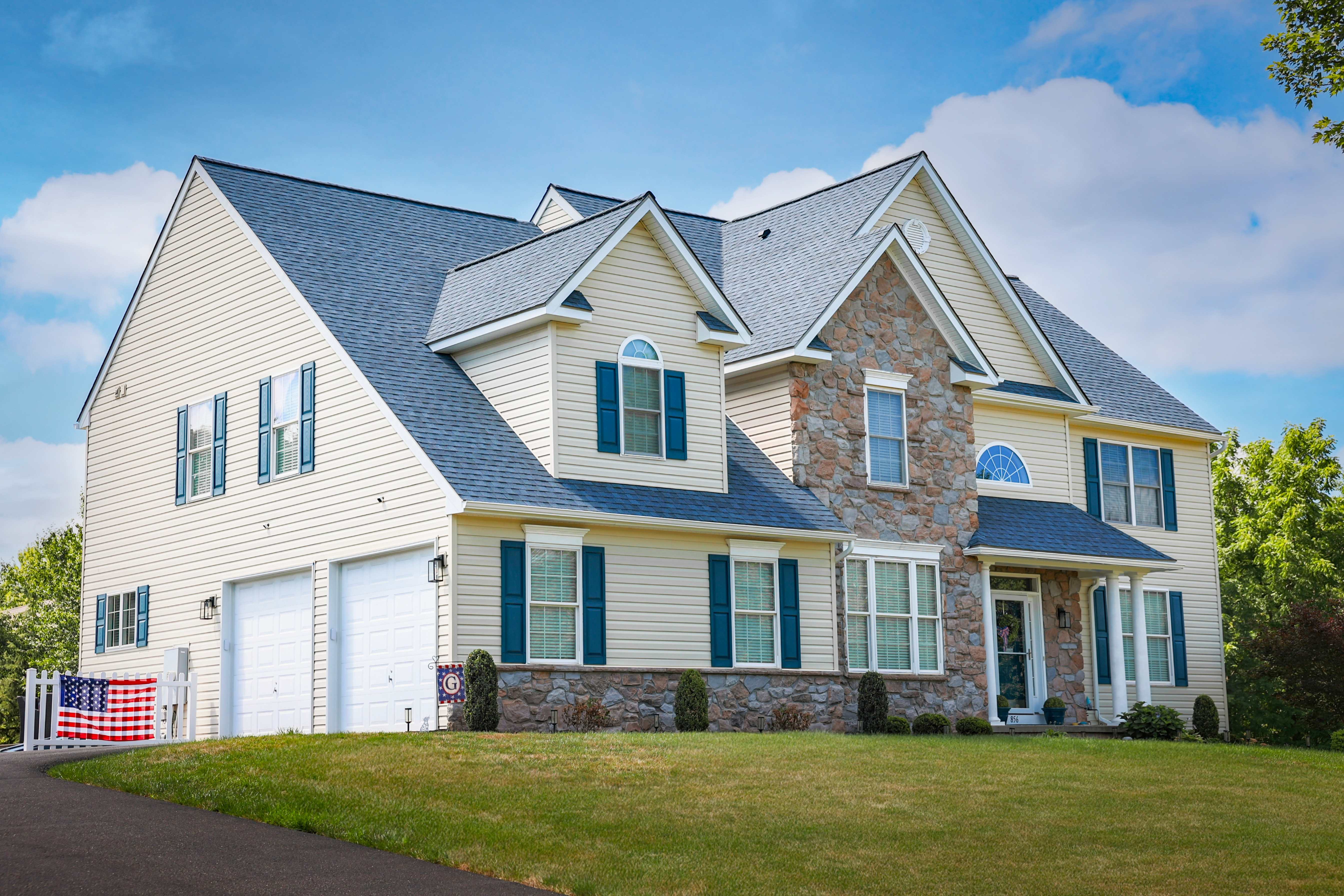
Soffit siding protects the underside of your roof overhang while helping your home breathe, shed moisture, and look more finished from the curb. Whether you are planning a full exterior update or replacing worn panels around the eaves, the right siding and soffit choices can reduce maintenance headaches and improve long-term performance. The best results come from matching material, ventilation, installation method, and design—not treating the soffit as an afterthought.
Why does soffit siding matter for your home?
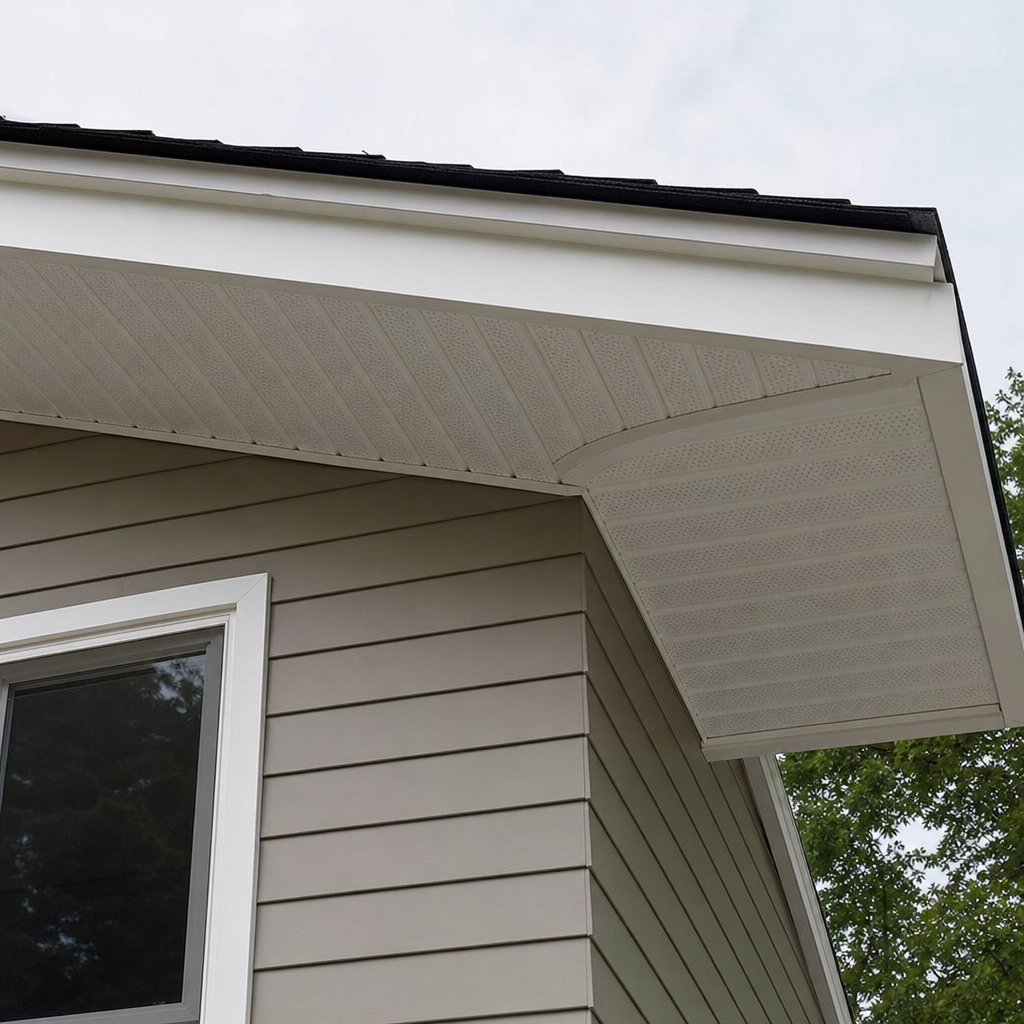
Soffit siding matters because it closes the exposed area beneath roof eaves, helping protect rafters and attic edges from weather, pests, and trapped moisture. It also supports attic ventilation when vented panels are used correctly, which can help reduce heat buildup and condensation. From the street, a clean exterior soffit creates a crisp transition between the roofline, fascia, trim, and siding, making the whole exterior feel more intentional.
A damaged or missing soffit can create problems that are easy to overlook at first. Peeling paint, sagging panels, dark stains, insect activity, or musty attic smells may point to moisture or airflow issues around the eaves. Installing updated soffit siding today can be a practical way to address those small warning signs before they become larger repair projects.
The practical benefits of installing soffit siding now
A soffit is not just a cosmetic panel. It is part of the home’s exterior system, working alongside roofing, fascia, gutters, wall siding, and attic ventilation. When it is installed correctly, it helps the home manage weather exposure while giving the roofline a neat, complete appearance.
Key benefits include:
- Moisture protection: Soffit panels help cover vulnerable eaves so wind-driven rain and debris are less likely to reach exposed wood.
- Better attic airflow: Vented panels can support intake ventilation, helping warm, damp air move out through the attic’s exhaust vents.
- Pest resistance: Closed eaves make it harder for birds, insects, and small animals to enter gaps around the roofline.
- Lower upkeep: Modern materials can reduce scraping, repainting, and frequent touch-ups compared with older painted wood.
- Cleaner curb appeal: Coordinated soffit, fascia, trim, and siding create a more polished exterior.
- Material performance options: Depending on your climate and priorities, you can choose products designed for durability, low maintenance, or added fire resistance.
The timing matters because soffit problems often hide in plain sight. Homeowners may focus on visible siding maintenance while the underside of the eaves quietly collects dirt, moisture, and damage. If you are already replacing siding, roofing, gutters, or trim, adding soffit installation to the same project can also make planning more efficient.
Material choices shape performance and maintenance
Your soffit material affects how the exterior looks, how much upkeep it needs, and how well it handles local conditions. There is no single best choice for every house. The right option depends on your budget, architecture, climate, fire exposure, and how much maintenance you want to take on.
Vinyl soffit
Vinyl soffit is a popular choice because it is lightweight, widely available, and relatively easy to work with. It comes in solid, vented, and partially vented styles, making it flexible for areas that need airflow and areas that do not. Many homeowners like vinyl because it does not need painting and can be cleaned with basic washing as part of routine siding maintenance.
Vinyl can work especially well when paired with vinyl siding or other low-maintenance siding options. It is often installed in panels running from the wall toward the fascia, using channels to hold the edges in place. Like all exterior materials, it needs room to expand and contract with temperature changes, so tight fastening or poor spacing can cause buckling.
Fiber cement soffit
Fiber cement soffit is valued for its durability, stability, and resistance to common exterior wear. It is often chosen for homes where a more substantial painted appearance is desired, or where fire performance is an important consideration. Many fiber cement products are available in smooth or woodgrain textures, which can make them easier to coordinate with lap siding, board-and-batten, trim, and other architectural details.
This material is heavier than vinyl and typically requires more careful cutting, fastening, and handling. For that reason, many homeowners prefer professional installation. When installed and finished properly, fiber cement can deliver a refined look with less routine upkeep than traditional wood.
Aluminum and other metal soffits
Aluminum soffit is another low-maintenance option, especially in areas where moisture resistance is a priority. It does not rot, and it is commonly available in vented and solid profiles. It can dent more easily than some other materials, but it remains a practical option for many homes, particularly when matched with aluminum fascia or gutters.
Metal soffits can create a crisp, clean line under the eaves. They are often used on both traditional and modern homes, depending on color and profile. As with any soffit material, installation quality has a major impact on appearance and long-term performance.
How should you choose between siding options?
Choose siding options by looking at the whole exterior system, not just the wall panels. The soffit should coordinate with siding color, trim width, roofline style, fascia, gutters, porch ceilings, and ventilation needs. A beautiful wall siding choice can still feel unfinished if the exterior soffit looks mismatched, under-vented, or poorly detailed.
A simple comparison can help narrow the decision:
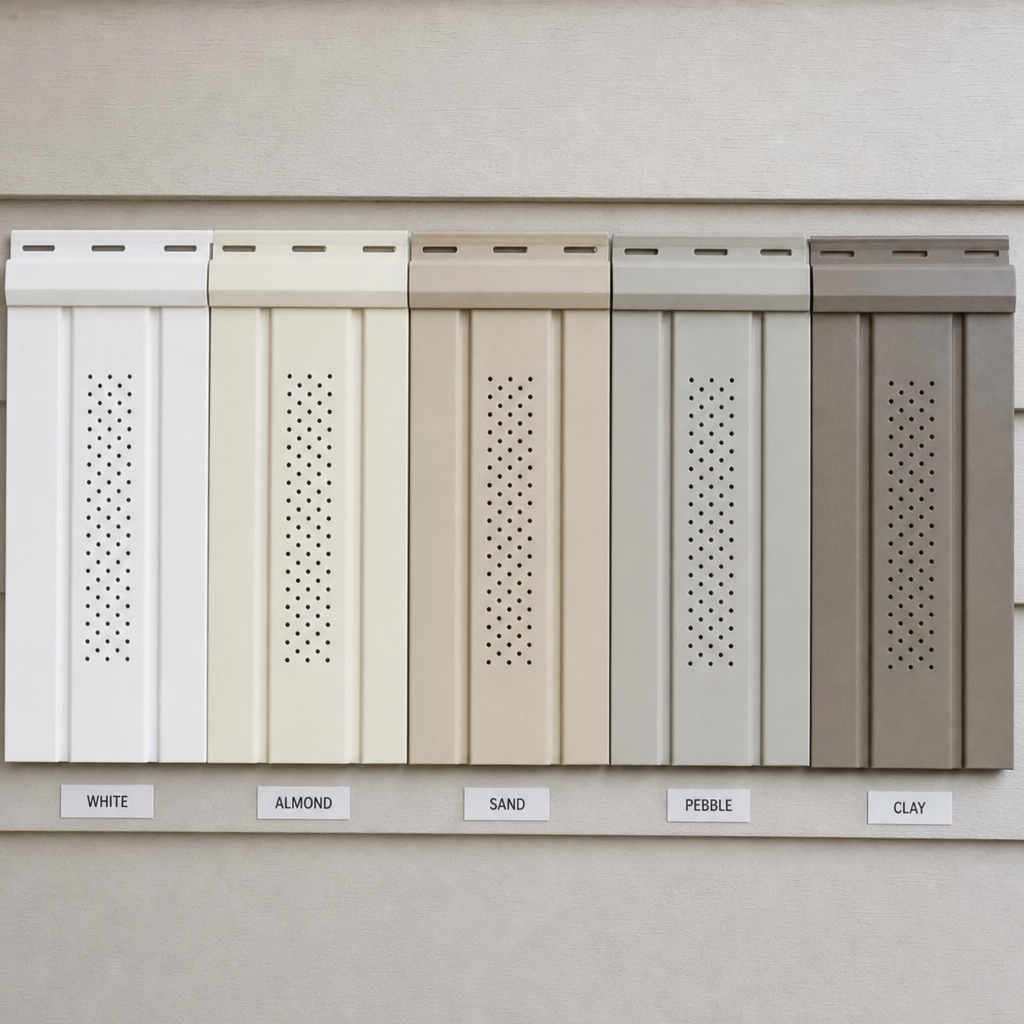
Color is just as important as material. White soffit can brighten deep overhangs and create a classic look, while darker soffit can make a roofline feel sharper and more contemporary. Layered neutrals, soft contrasts, and two-tone exterior palettes can work well when the soffit intentionally connects the roof, trim, and siding instead of competing with them.
Proper soffit installation protects the investment
Even high-quality materials can fail early if they are installed poorly. Soffit installation must allow for movement, drainage, airflow, and secure support. It also needs to follow local building requirements, especially where wind loads, attic ventilation, or wildfire-resilience rules apply.
A typical project may include these steps:
- Inspect the existing eaves. Look for rot, loose fascia, pest damage, roof leaks, or blocked vents before covering the area.
- Confirm ventilation needs. Determine where vented panels are required and whether attic airflow is balanced with exhaust ventilation.
- Prepare channels and supports. Install J-channel, F-channel, or other receiving trim as needed to hold panel edges neatly.
- Cut panels to fit. Panels should fit securely without being forced tight against the channels.
- Allow for expansion. Vinyl and other materials need slight movement space so they do not warp or buckle.
- Fasten correctly. Fasteners should hold the material in place without pinning it so tightly that it cannot move.
- Finish transitions carefully. Corners, porch ceilings, fascia returns, and gable details should look clean and consistent.
Open eaves and enclosed eaves may require different installation approaches. Open eaves often need framing or support strips before panels can be installed, while enclosed eaves may involve replacing existing panels within an established structure. In both cases, shortcuts around ventilation and fastening can lead to moisture buildup, sagging, or visible waves.
Ventilation is a small detail with big consequences
Vented soffit helps bring fresh air into the attic at the lower edge of the roof. That intake air works with upper exhaust vents to move heat and moisture out of the attic space. Without enough intake, even a well-built roof can struggle with condensation, stale air, and temperature imbalance.
This does not mean every panel should be vented. Some areas may call for solid panels, especially where ventilation is not needed or where weather exposure makes vents less practical. The goal is a balanced design that gives the attic the airflow it needs without creating openings in the wrong places.
Before installing new soffit siding, check whether insulation is blocking the eaves. Baffles may be needed to keep airflow paths open from the soffit into the attic. This is one reason soffit work is often best planned with roofing, insulation, or siding upgrades rather than handled as a purely decorative change.
Design details make siding and soffit feel cohesive
A good soffit choice should disappear in the right way: it should make the home look cleaner without drawing attention to awkward seams or mismatched finishes. When siding and soffit are selected together, the result feels more deliberate. The roofline frames the walls, the trim looks sharper, and the exterior gains visual order.
Helpful design moves include:
- Match undertones, not just colors. A warm white soffit may clash with cool gray siding, even if both look neutral on their own.
- Use contrast carefully. Dark soffit can look striking on modern homes, but it may feel heavy on low rooflines or small porches.
- Coordinate with fascia and gutters. These elements sit close together, so mismatched finishes are easy to notice.
- Think about porch ceilings. A porch soffit can be a design feature, especially with beadboard-style panels or a contrasting shade.
- Keep profiles consistent. Mixing too many textures can make the exterior feel busy.
The best exterior updates balance durability with restraint. A soffit does not need to be flashy to improve curb appeal. Clean lines, aligned seams, and thoughtful color choices often make the strongest impression.
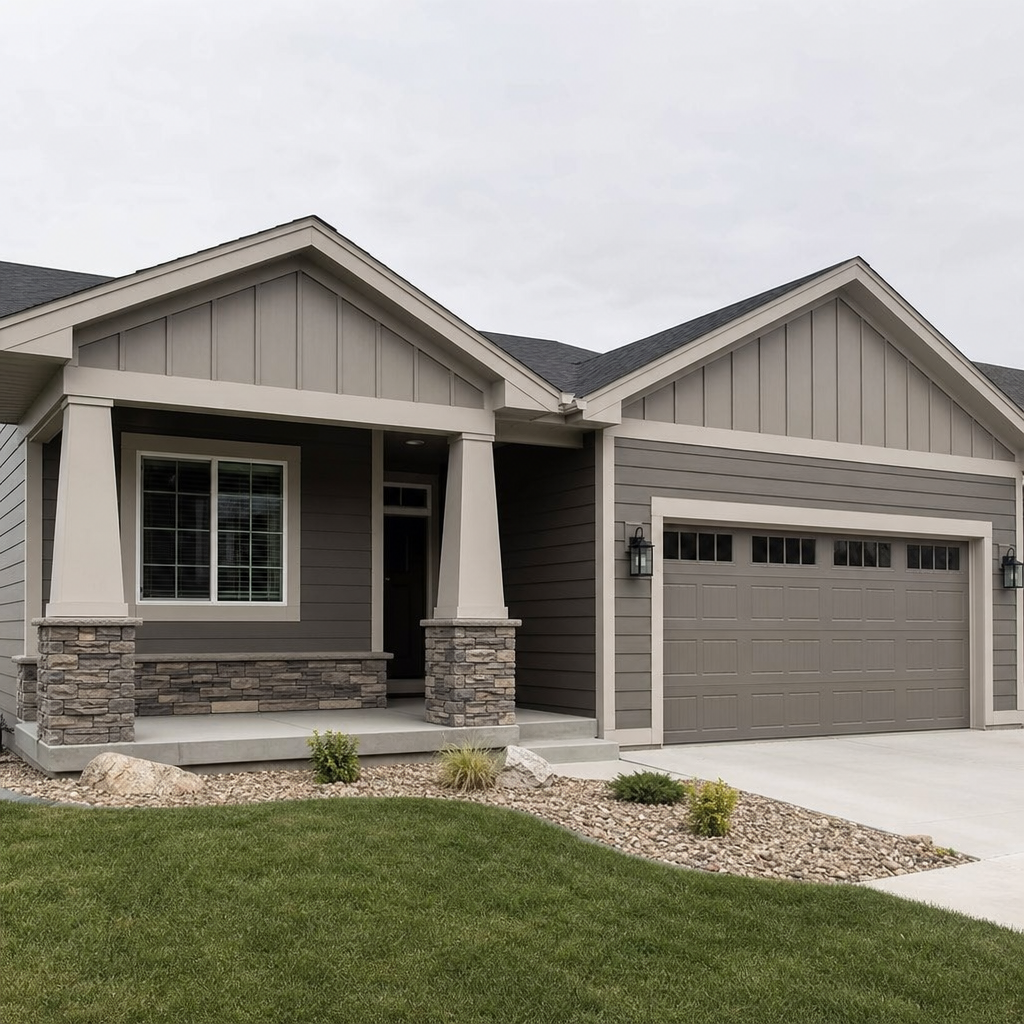
Simple siding maintenance keeps soffits performing
Once your soffit is installed, a little routine care can help it last longer and look better. Most homeowners can inspect soffits from the ground several times a year, especially after storms or heavy seasonal debris. Look for loose panels, stains, cracks, peeling finish, clogged vents, or signs of insects.
A practical maintenance checklist includes:
- Rinse dust, pollen, and cobwebs with a garden hose or gentle cleaning method.
- Keep gutters clear so water does not overflow onto fascia and soffit areas.
- Trim nearby branches that scrape the roofline or drop debris into vents.
- Check that vent openings are not painted shut, blocked by insulation, or packed with nests.
- Repair small gaps before pests or moisture find a path inside.
- Repaint or touch up materials that require finish maintenance, such as wood or some fiber cement products.
Avoid aggressive pressure washing near vents or panel seams. For stubborn stains, use cleaning methods recommended for the specific material. If panels are sagging, repeatedly coming loose, or showing water damage, the issue may be behind the soffit rather than on the surface.
When hiring a professional makes sense
Some homeowners can handle small soffit repairs, especially on low, accessible sections. Larger projects are different. Working around roof edges, ladders, ventilation paths, and trim transitions can become complicated quickly, and mistakes may not show up until moisture damage has already started.
Professional help is especially useful when there is visible rot, uncertain attic ventilation, multiple stories, complex corners, or a full siding replacement underway. A contractor can also help sequence the project so fascia, gutters, siding, and soffit installation work together instead of interfering with one another. If you live in an area with strict building requirements, a professional can help ensure the installation method and materials are appropriate.
A better exterior starts at the roofline
Soffit siding may not be the first thing people notice, but it quietly does important work every day. It helps protect the eaves, supports attic airflow, reduces exposed maintenance areas, and gives the home a cleaner architectural finish. When chosen with the right siding options and installed with care, it becomes a small upgrade with a meaningful impact.
If your exterior soffit is stained, warped, poorly ventilated, or simply out of step with the rest of your home, now is a good time to evaluate it. Pair smart material choices with proper installation and routine siding maintenance, and your roofline will look better, perform better, and support a healthier exterior system for years to come.