

Snow and Roof: What Every Homeowner Should Know Before Winter
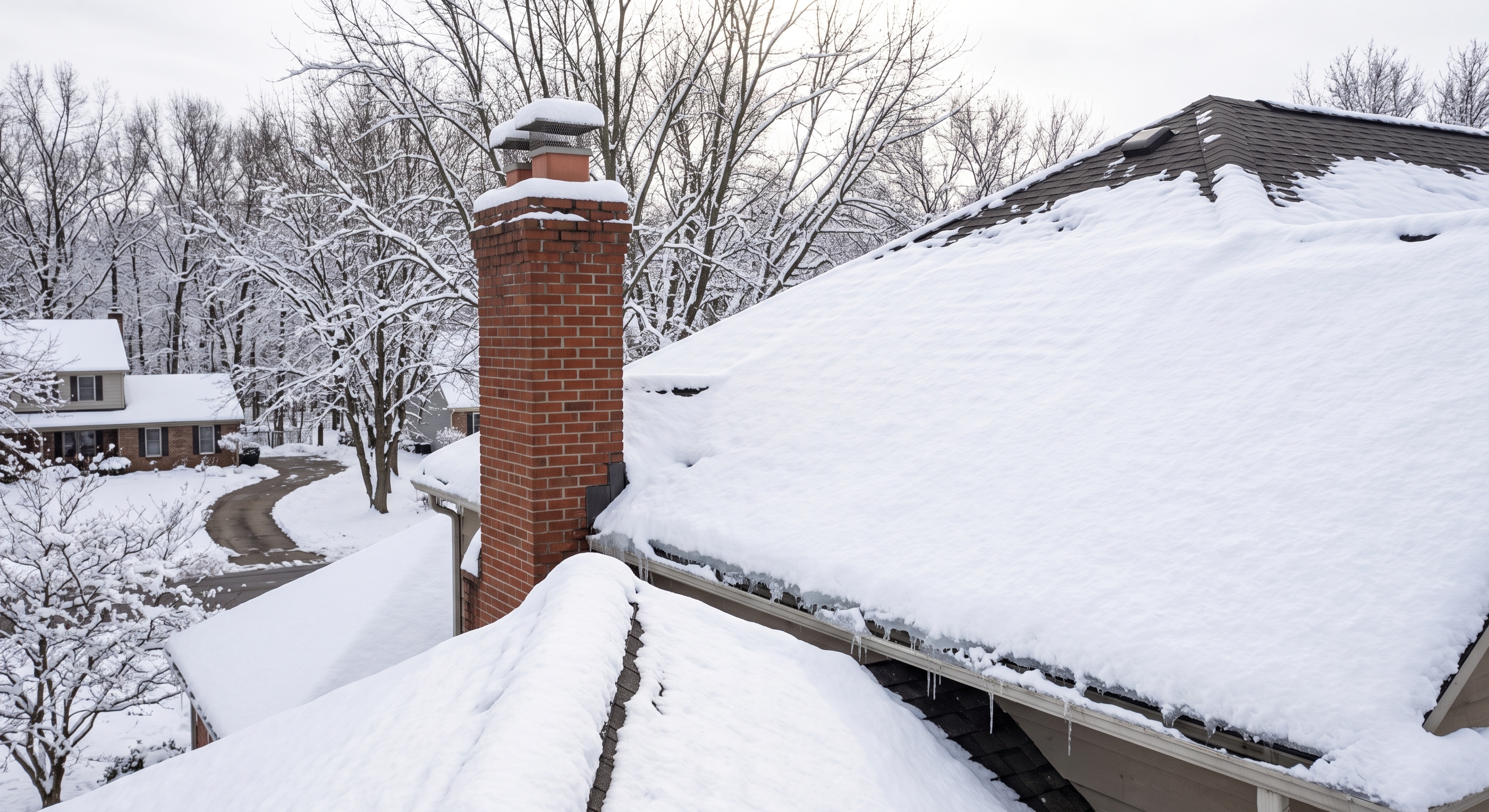

Snow sitting on a roof looks harmless enough from the ground, but the relationship between snow and roof health is more complicated than most homeowners realize. Weight, melting patterns, and ventilation all play a role in whether your roof handles winter well or ends up with damage that isn't obvious until spring. Here's what's actually happening up there and how to protect your roof through the season.
How Snow Affects Your Roof
Snow itself isn't inherently damaging to a well-built roof. The issues come from a combination of weight, uneven melting, and moisture that gets trapped where it shouldn't be.
Weight and structural load. Every roof is designed with a snow load capacity in mind, but that capacity assumes proper drainage and doesn't account for repeated snow accumulation without melting or removal between storms. Wet, heavy snow carries significantly more weight than the same depth of dry, powdery snow, which matters more than total snowfall alone.
Uneven melting. Roofs rarely melt snow evenly. Warmer sections, often above heated living space or poorly insulated attic areas, melt snow faster than colder eaves and overhangs. That mismatch is where the next issue starts.
Ice dams. When melted snow refreezes at the colder edge of the roof, it can form a ridge of ice that blocks further meltwater from draining properly. Water then backs up under the shingles instead of running off, which is one of the most common causes of winter roof leaks.
Signs Your Roof Is Under Snow-Related Stress
- Visible sagging anywhere along the roofline, which should be treated as urgent
- Cracking or popping sounds from the attic or ceiling during or after a heavy snowfall
- Doors or windows on the top floor becoming difficult to open or close, sometimes a sign of structural shifting
- Ice buildup along the eaves, a visible warning sign of ice dam formation
- Water stains appearing on ceilings or upper walls during or after snowmelt
- Icicles forming in unusually large or thick formations, often linked to ice dam activity underneath
Why Attic Insulation and Ventilation Matter More Than You'd Think
The biggest factor in preventing uneven melting and ice dams isn't the roofing material itself. It's what's happening in the attic below it. Poor insulation allows heat from living spaces to escape into the attic, warming the roof deck unevenly and accelerating snowmelt near the ridge while the eaves stay cold. Proper attic ventilation helps keep the roof deck at a more consistent, colder temperature throughout, reducing the melt-refreeze cycle that drives ice dam formation.
Homes with older insulation, inadequate ventilation, or recent additions and renovations are more prone to this uneven melting pattern than homes with a properly balanced attic system.
Safe Snow Removal Practices
Use a roof rake for accessible snow. A roof rake lets you remove snow from the ground on single-story sections and overhangs, reducing weight without the risk of climbing onto a snow-covered roof.
Avoid walking on a snow-covered roof. Snow and ice make roofs dangerously slippery, and added foot traffic weight on an already-loaded roof is a real safety risk.
Never chip at ice dams directly. Attempting to break up ice dams with tools can damage shingles and the roof deck underneath. Calcium chloride ice melt applied carefully, or professional steam removal, are safer approaches.
Know when to call a professional. Steep roofs, multi-story homes, and significant accumulation are all situations where professional snow and ice removal is the safer and often more effective choice.
When to Be Concerned About Snow Load
Most residential roofs are built to handle typical regional snow loads without issue. Concern becomes warranted when:
- Snow has accumulated over multiple storms without melting or being removed
- The snow is wet and heavy rather than light and powdery
- You notice any signs of structural stress, like sagging, cracking sounds, or doors that won't close properly
- Flat or low-slope sections of the roof, which don't shed snow as effectively as steeper pitches, are carrying visible buildup
If you're ever unsure whether accumulated snow is a genuine structural concern, treat it as one and have it evaluated rather than waiting to see what happens.
Preparing Your Roof Before Winter Arrives
The best time to address snow and ice vulnerability is before the first major storm, not during one. A pre-winter check should include:
- Confirming attic insulation and ventilation are adequate and functioning as intended
- Clearing gutters so meltwater has a clear path off the roof
- Checking for any existing shingle damage that could worsen under snow and ice exposure
- Addressing any known leak points or flashing issues before they're compounded by winter weather
Frequently Asked Questions
How much snow can a roof handle before it's a problem?
Most residential roofs are engineered for regional snow load standards, but wet, heavy snow that accumulates over multiple storms without melting can exceed safe limits faster than dry powder of the same depth. Any visible sagging should be treated as an immediate concern regardless of total snowfall.
What causes ice dams on a roof?
Ice dams form when heat escaping into the attic melts snow near the roof's warmer areas, and that meltwater refreezes at the colder eaves, creating a ridge of ice that blocks proper drainage. Poor attic insulation and ventilation are the most common underlying causes.
Is it safe to remove snow from my roof myself?
For single-story, easily accessible sections, a roof rake used from the ground is generally safe. Climbing onto a snow-covered roof, especially on steep pitches or multi-story homes, carries real safety risk and is better left to a professional.
How do I know if snow has already damaged my roof?
Signs include water stains on ceilings, sagging rooflines, cracking sounds from the attic, and heavy icicle or ice dam formation at the eaves. A professional inspection after a heavy snow season can catch damage that isn't visible from inside the home.
Get Your Roof Ready Before the Next Storm
Snow-related roof damage is far easier to prevent than repair. If it's been a while since your roof, insulation, or ventilation were checked, now is the time.
Request a free roof estimate today. Call (610) 539-6730 or visit govolpe.com to schedule yours.