

7 Types of Roof Vents: The Complete Attic Ventilation Guide
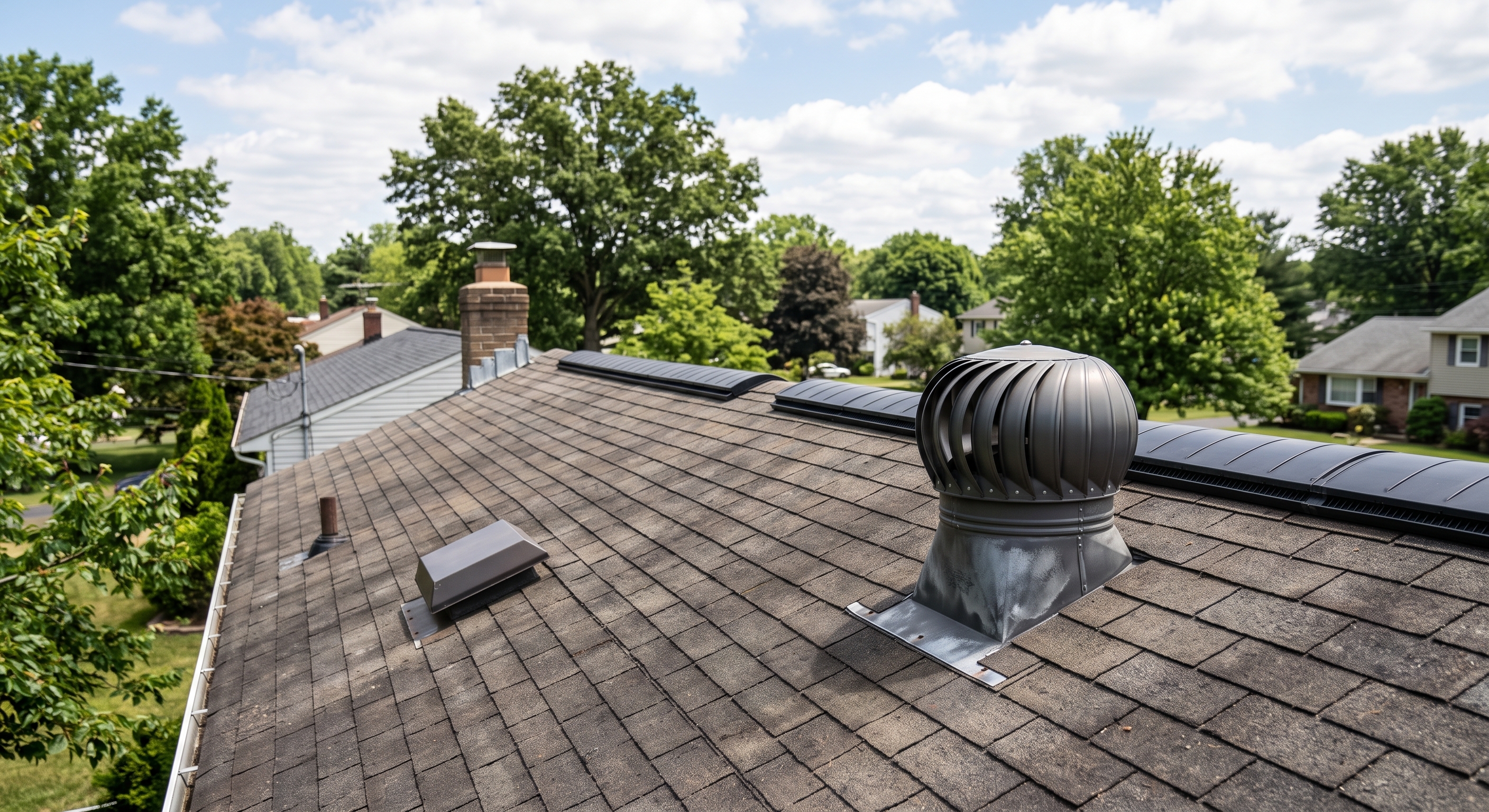

Did you know that inadequate attic ventilation is one of the leading causes of premature roof failure, ice dams, high energy bills, and poor indoor air quality?
Without proper airflow, hot, moist air becomes trapped in your attic space. During hot Pennsylvania summers, an unventilated attic can reach temperatures upward of 150°F, baking your roof shingles from underneath and overloading your air conditioner. In the winter, trapped moisture condenses on roof sheathing, promoting toxic mold growth, rotting wooden rafters, and melting snow that freezes into dangerous ice dams.
Understanding how roof ventilation works and choosing the right mix of intake and exhaust vents is essential to protecting your roofline and home comfort.
Effective roof ventilation requires a balanced system that continuously cycles fresh outdoor air in while expelling hot, humid air out:
How Roof Ventilation Works: Passive vs. Mechanical Systems
Attic ventilation operates using four core methods:
- Natural Passive Ventilation: Uses thermal buoyancy (the natural stack effect of hot air rising) and external wind pressure to pull cool air in through lower vents and push warm air out through upper vents without electricity.
- Mechanical Assistance: Electric motors or solar-powered fans actively pull stagnant air out of the space, creating continuous airflow even on windless summer days.
- Hybrid Systems: Combines natural passive openings (like soffit panels) with thermostat-driven fans to boost ventilation during extreme heat waves.
- Exhaust Systems: Mechanical units that depressurize spaces to sweep out localized moisture, commonly connected to kitchen range hoods and bathroom exhaust fans.
The 7 Common Types of Roof Vents
1. Ridge Vents (Exhaust)
Installed along the horizontal peak (ridge) of your roof, ridge vents are capped with shingles for a seamless, invisible appearance. Because hot air naturally rises to the highest point of an attic, continuous ridge vents offer the most efficient way to release heat. When paired with soffit intake vents, they form the industry-gold-standard passive ventilation system.
2. Soffit Vents (Intake)
Located on the underside of your roof's overhanging eaves (the soffit), these discreet vents draw cool, dry outdoor air directly into the bottom of the attic space. They are available as individual louvered grates or continuous perforated soffit panels.
Important Note: Soffit vents must be kept clear of blown-in attic insulation. Installing rafter vents (baffles) prevents insulation from blocking air intake at the eaves.
3. Box Vents / Turtle Vents (Exhaust)
Box vents are small, static aluminum or plastic square hoods installed over holes cut near the roof ridge. Because they rely entirely on natural convection and cover localized areas, multiple box vents must be strategically placed across a roof plane to deliver adequate coverage.
4. Off-Ridge Vents (Exhaust)
Off-ridge vents function similarly to box vents but are manufactured in longer, galvanized steel sections (typically 4 feet long). Positioned just below the main ridge line, they are ideal for roof shapes with short ridge lengths or multiple decorative dormers.
5. Gable Vents (Cross-Ventilation)
Gable vents are louvered openings installed on the exterior vertical end walls of a home's peak. They rely on horizontal crosswinds to sweep air across the attic. While popular in historic and mid-century homes, gable vents are less efficient than modern vertical ridge-and-soffit systems.
6. Power Attic Fans & Solar Vents (Mechanical Exhaust)
Attic power fans feature built-in thermostats or humidistats that automatically trigger electric or solar-powered blades when attic temperatures exceed a set threshold (e.g., 105°F). They are exceptionally effective at cooling massive attic spaces rapidly, though electric models add slightly to monthly utility costs.
7. Wind Turbines / Whirlybirds (Hybrid Exhaust)
Turbine vents feature rotating metal fins mounted on the roof surface. As outdoor wind spins the turbine, it creates a vacuum effect that draws hot air out of the attic. While highly effective in breezy locations, they remain motionless on completely still days.
Signs Your Home Has Poor Attic Ventilation
Not sure if your roof ventilation system is performing properly? Watch for these common warning signs:
- Ice Dams in Winter: Melted snow refreezing into heavy ice ridges along your gutter line indicates heat escaping from your attic due to poor ventilation and insulation.
- Excessively Hot Second Floor: If your upper floor stays hot and uncomfortable during summer despite your air conditioner running non-stop, your attic is trapping heat.
- Rust, Mold, or Musty Odors: Condensation on roof nails, rusted light fixtures, or damp, moldy insulation indicate trapped moisture cannot escape.
- Warped or Buckled Roofing Shingles: Extreme heat buildup beneath the roof deck bakes shingle underlayment, causing asphalt shingles to crack, cup, or lose mineral granules prematurely.
Frequently Asked Questions (FAQ)
Can you have too much roof ventilation?
While you cannot over-ventilate an attic in terms of air volume, improperly balanced ventilation can create issues. For example, installing an attic power fan alongside an open ridge vent can pull air inward through the ridge vent—bringing rain or snow into your attic space instead of drawing air up from soffit vents.
Should gable vents be closed if you have a ridge vent?
Yes. Mixing horizontal gable vents with a vertical soffit-and-ridge vent system short-circuits airflow. Air will enter through the nearby gable vent rather than pulling air up from the soffit vents, leaving lower attic corners stagnant.
How much attic ventilation does a home need?
A standard rule of thumb mandated by building code is 1 square foot of net free vent area (NFVA) for every 300 square feet of attic floor space (or 1:150 if balanced 50/50 between intake and exhaust without a vapor barrier).
Upgrade Your Roof Ventilation with Volpe Enterprises
A long-lasting roof requires more than just high-quality shingles—it requires a properly balanced ventilation system that protects your home year-round.
Whether you need a full roof replacement, soffit and trim upgrades, or an attic insulation inspection, the craftsmen at Volpe Enterprises, Inc. have delivered trusted home improvements across Bucks, Chester, and Montgomery Counties since 1970.
Contact our team today or visit one of our local showrooms in North Wales, Norristown, or Malvern, PA for your free, no-obligation roof evaluation!