
Should You Replace Your Commercial Flat Roof? Signs, Systems & Costs
A commercial flat roof is a critical asset that protects your building's structural integrity, inventory, equipment, tenants, and business operations. However, because flat roofs feature low slopes, they are continuously subjected to standing water, intense UV radiation, thermal expansion, and harsh seasonal freeze-thaw cycles across Southeastern Pennsylvania.
Knowing when to repair versus when to replace your commercial flat roof is essential to avoiding costly emergency building closures, structural deck rot, and skyrocketing energy bills.
Signs of Trouble With Your Flat Roof
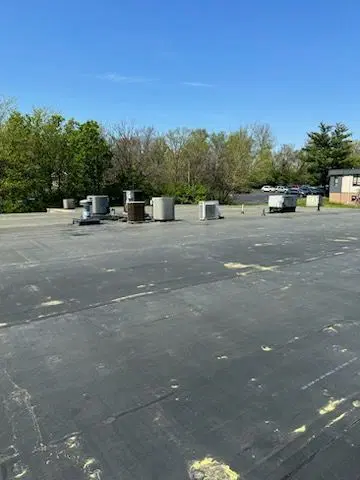
When your commercial flat roof reaches the end of its lifespan or shows signs of significant damage, it’s crucial to consider replacing it. These signs can manifest in various ways, and some are more subtle than others. Here are the key indicators to watch out for:
6 Warning Signs It’s Time to Replace Your Commercial Flat Roof
If your commercial building displays any of the following warning signs, scheduling a professional roof evaluation is critical:
1. Chronic Leaks & Internal Moisture Stains
If your maintenance crew is constantly chasing leaks after every rainstorm, or if tenant spaces show water-stained ceiling tiles, active water is infiltrating the underlying insulation and roof deck.
2. Persistent Ponding Water (48+ Hours)
Flat roofs are engineered with a subtle pitch toward scuppers, drains, or gutters. If standing water remains on the roof surface longer than 48 hours after rain, the excess weight degrades roof membrane seams and signals underlying structural sag or blocked internal drainage.
3. Open Seams, Blistering, or Punctures
Thermal expansion causes single-ply membrane seams to pull apart over time. Look for bubbling (trapped moisture expanding under the membrane), cracking, or tears around HVAC curbs, pipe boots, and parapet wall flashing.
4. Saturated Insulation & Spongy Decking
When water penetrates the membrane, insulation boards beneath absorb water like a sponge. Walking across a saturated roof reveals soft, spongy spots—a clear indicator that moisture has compromised the thermal barrier and structural decking.
5. Surging Heating and Cooling Expenses
If your commercial HVAC system works harder and utility bills climb steadily, wet, damaged insulation beneath your flat roof has lost its R-value, allowing heat to transfer freely in and out of the building.
6. The Roof Is Approaching Its Design Lifespan
Most single-ply flat roofs (such as EPDM, TPO, or modified bitumen) carry functional lifespans of 15 to 25 years. If your roof is past 20 years old, proactive replacement prevents emergency structural failures and expensive interior water loss.
Flat Roof Replacement Options: Layover vs. Full Tear-Off
When replacing a commercial flat roof, business owners generally have two execution paths:
- Flat Roof Layover (Recover): A new membrane and thin cover board are installed directly over the existing roof. This reduces labor costs and landfill fees. However, building codes typically restrict buildings to a maximum of two roof layers, and layovers cannot be performed if the underlying insulation is wet or degraded.
- Full Flat Roof Tear-Off: The old membrane and saturated insulation are removed down to the structural deck (metal, wood, or concrete). Damaged decking is repaired, new tapered insulation is installed to eliminate ponding water, and a brand-new membrane is applied. A full tear-off maximizes long-term reliability and qualifies for maximum manufacturer warranty coverage.
Frequently Asked Questions (FAQ)
How long does a commercial flat roof replacement take?
Project duration depends on square footage, roof height, staging access, chosen membrane system, and weather conditions. Average commercial flat roof replacements take 3 to 7 days, and professional contractors work to ensure business operations continue uninterrupted below.
Which is better for a commercial roof: TPO or EPDM?
TPO is ideal for building owners seeking energy efficiency, as its bright white surface reflects solar heat and lowers cooling expenses. EPDM is an exceptional, durable choice for cost-effective performance and flexibility in colder climates.
Can a commercial flat roof be restored with a coating instead of replaced?
If the underlying insulation is completely dry and structural seams remain intact, applying an elastomeric or silicone roof coating system can extend functional roof life by 10 to 15 years. However, if the insulation is saturated or structural rot exists, a full replacement is required.
Request Your Commercial Flat Roof Evaluation Today
Don't wait for minor leaks to turn into costly structural repairs or business disruptions. Partner with Southeastern Pennsylvania's commercial roofing specialists.
At Volpe Enterprises, Inc., we have provided trusted commercial and residential roofing, siding, gutter, and window services across Montgomery, Bucks, and Chester Counties since 1970.
Contact our commercial roofing team today or visit one of our local showrooms in North Wales, Norristown, or Malvern, PA to schedule your comprehensive flat roof evaluation!