

Drafty or Leaking Windows: Causes, Fixes, and When to Replace
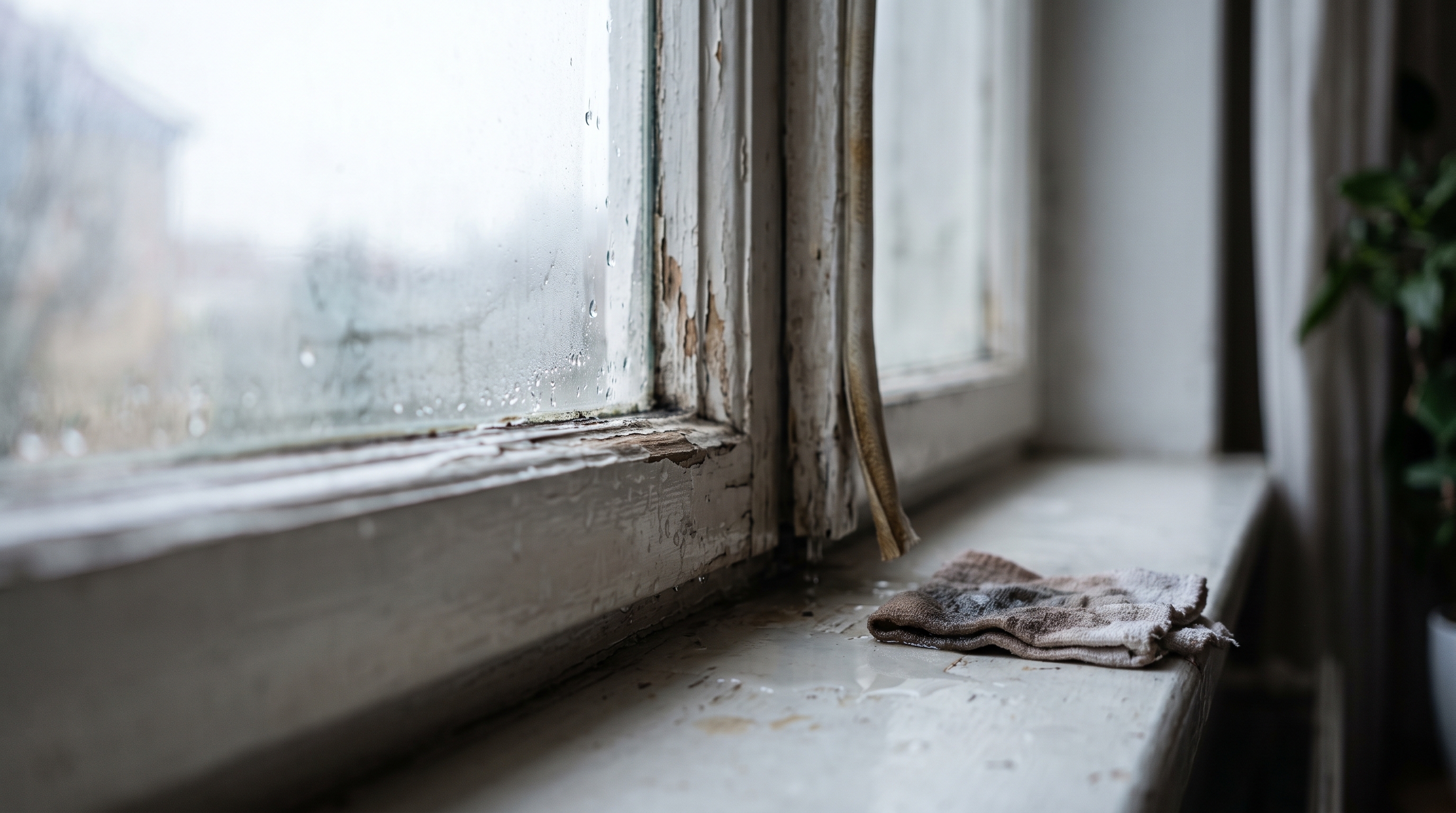

Quick answer: Drafty windows usually come from worn weatherstripping, failed caulk, or gaps around the frame. Leaking windows usually come from failed exterior seals, clogged drainage channels, or flashing problems. Many issues can be fixed with new caulk or weatherstripping, but fogged glass, rotted frames, or repeated leaks point to window replacement.
Why Are My Windows Drafty?
Feeling cold air near a closed window is one of the clearest signs of air leakage. The most common causes are:
Worn weatherstripping. The seals between the sash and frame compress and crack over time.
Failed caulk. Exterior and interior caulk lines shrink, crack, and pull away from the frame.
Gaps around the frame. Poor insulation between the window frame and the wall framing lets air move through the wall cavity.
Warped or loose sashes. Wood windows can swell or shrink with humidity, and older windows may no longer close tightly.
Failing glass seals. In double pane units, a broken seal reduces insulation and can lead to fogging and cold spots.
How to Find the Source of a Draft
On a cold or windy day, hold a lit incense stick or a piece of tissue near the edges of the sash and frame. Movement in the smoke or tissue shows where air is getting in. Check the corners, the meeting rail on double hung windows, and the trim where the window meets the wall.
Quick Fixes for Drafty Windows
- Replace worn weatherstripping on the sash
- Remove old caulk and apply fresh exterior grade caulk around the frame
- Add window film or removable seals as a short term measure
- Adjust or repair sash locks so the sash pulls tight against the frame
- Insulate gaps between the frame and rough opening from the inside where accessible
Why Is My Window Leaking Water?
Water coming in around a window is more serious than a draft. Typical causes include:
Failed exterior caulk or sealant. Water finds a gap and runs behind the trim.
Clogged weep holes. Many windows have small drainage channels in the frame. When these fill with dirt or debris, water backs up and spills inside.
Missing or damaged flashing. Flashing directs water away from the window opening. If it was installed incorrectly or has deteriorated, water can enter the wall.
Cracked frames or glass seals. Aging vinyl, wood, or aluminum frames can crack or separate at the corners.
Condensation, not a true leak. Moisture on the glass surface may be condensation from indoor humidity, which is a ventilation and humidity issue rather than a water entry problem.
How to Tell a Leak From Condensation
Condensation forms on the interior glass, usually in cold weather, and wipes away. A leak shows up as staining, dripping from the frame or trim, bubbling paint, or soft, damp wood around the window. Condensation between the panes is a different issue, and it signals a failed insulated glass unit.
Fixes for Leaking Windows
- Clear weep holes and tracks with a small brush or compressed air
- Remove failing caulk and reseal the exterior perimeter
- Repair or replace damaged exterior trim
- Re-flash the window opening if water is entering behind the siding
- Replace the window if the frame or glass unit has failed
When Repairs Stop Making Sense
A window repair is a good value when the frame and glass are sound. Replacement is usually the better path when:
- There is fog or moisture between the glass panes
- The frame is rotted, warped, or cracked
- The window is difficult to open, close, or lock
- The same window keeps leaking after repairs
- You have multiple drafty windows and high heating bills
- Water has already damaged the wall, trim, or siding around the window
Why Window Leaks Should Not Wait
Water entering at a window often travels inside the wall cavity where it cannot be seen. Over time it can rot framing, ruin insulation, stain drywall, and create conditions for mold. Fixing a small seal problem early is far simpler than repairing the damage a slow leak leaves behind.
Frequently Asked Questions
Why do my windows feel cold even when closed? Cold surfaces may be a sign of poor insulation in the glass or frame, while moving air indicates leaks around the sash or frame. Both reduce comfort and efficiency.
Can I fix drafty windows without replacing them? Often yes. New weatherstripping, fresh caulk, and sealing gaps around the frame can solve many draft issues when the window itself is in good condition.
Why is water leaking around my window after heavy rain? Common causes are failed caulk, clogged weep holes, or missing flashing. Wind driven rain tends to find these weak points quickly.
How do I know if my window needs to be replaced? Fogged glass, rot, cracked frames, difficulty operating the window, or repeated leaks are strong signs that replacement is the better option.
Does replacing windows reduce drafts? Properly installed, energy efficient windows with tight seals significantly reduce air leakage, especially when old, worn units are replaced.
Get Your Windows Evaluated
Volpe Enterprises helps homeowners across Montgomery County sort out whether a window needs a repair or a replacement. If your windows are drafty, leaking, or fogged, we can look at the condition of the frames, seals, and surrounding walls and give you a clear recommendation.
Request a free window estimate today.