

Is Snow on Your Roof Dangerous? A Greater Philadelphia Homeowner’s Winter Guide

When winter storms sweep across Southeastern Pennsylvania, snow accumulation on your roof becomes a serious—and often hidden—concern. While the Greater Philadelphia area may not experience heavy blizzards every week, our distinct climate creates ideal conditions for severe winter roof damage, structural strain, and costly ice dams.
Understanding the risks of snow buildup helps you decide when to let nature take its course and when it is time to intervene to protect your home.
The Hidden Risks of Winter Snow Accumulation
1. Structural Strain and Weight Load
A few inches of dry, powdery snow rarely poses a threat. However, wet, dense snow weighs significantly more. Just 12 inches of heavy, wet snow can add up to 6,000 pounds of weight to your roof structure—the equivalent of parking a full-sized pickup truck on your shingles. For older homes throughout Philadelphia, Bucks, Chester, Montgomery, and Delaware counties, this weight can cause severe structural stress, sagging, or even sudden collapse.
2. The Great Philadelphia Ice Dam Threat
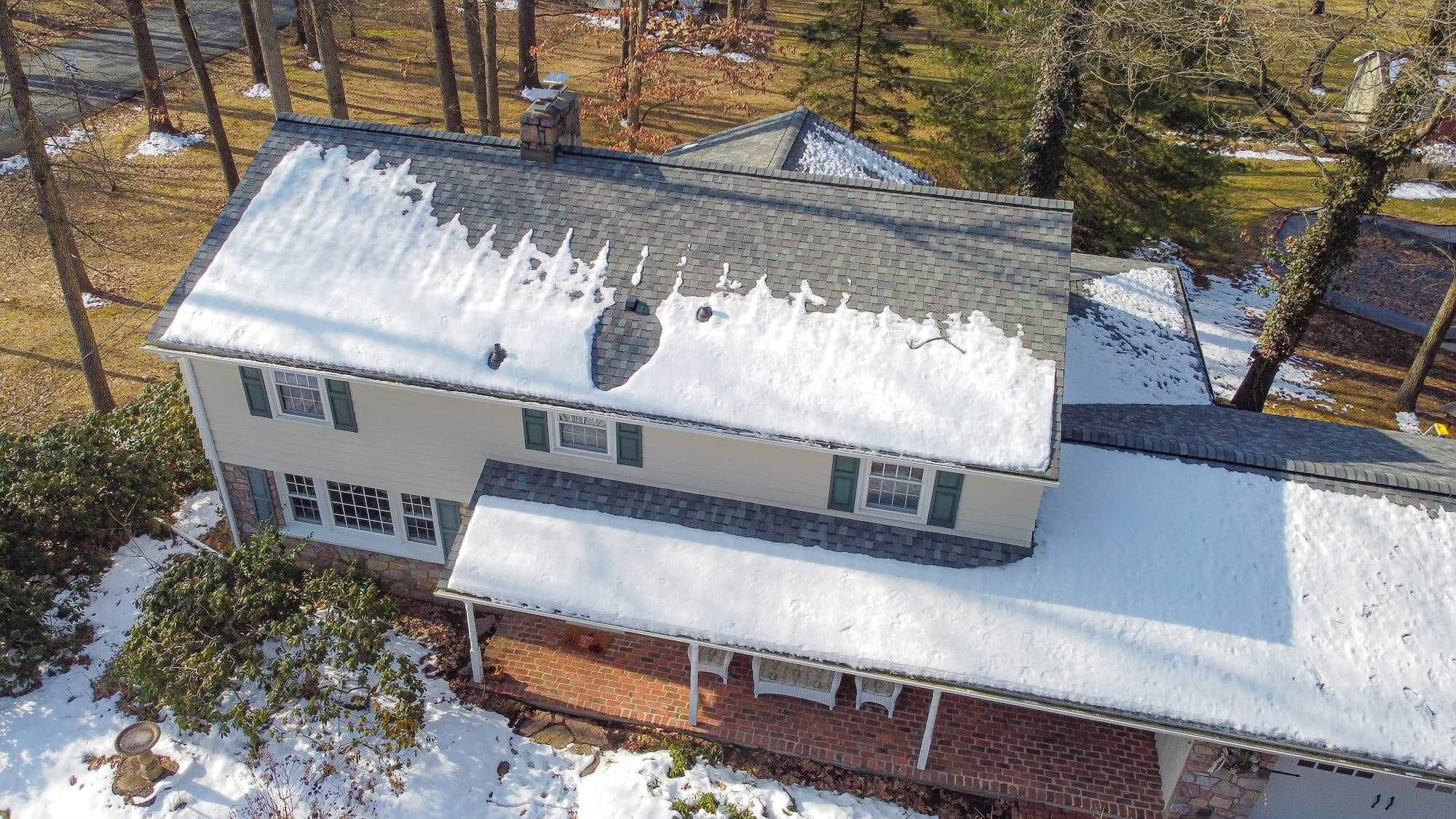
Ice dams are among the most frequent winter complaints for local homeowners. They form when heat escapes from an under-insulated attic, melting the bottom layer of snow on your roof. As the runoff flows down to your unheated eaves and gutters, it refreezes into a thick ridge of ice. This ridge traps melting water behind it, forcing moisture under your shingles and directly into your attic, walls, and ceiling.
3. Interior Water Damage and Mold Growth
Once water bypasses your roofing system, structural damage happens quickly. Moisture infiltration ruins insulation, rots wooden rafters, ruins drywall, and creates an environment where mold and mildew thrive—leading to expensive emergency repairs.
How to Determine If You Need Roof Snow Removal
Local Climate Realities
The Philadelphia region averages around 19 inches of snow per year. Because temperatures here frequently hover right around the freezing mark (32 degrees Fahrenheit), snow melts slightly during the day and freezes solid at night. This rapid freeze-thaw cycle significantly increases the risk of ice damming compared to regions with consistently sub-zero temperatures.
Safe Snow Removal Techniques and Warning Signs
Warning Signs of Structural Roof Stress
If your roof is struggling under a heavy winter load, your home will give you clear warning signals:
- Visual sagging along the exterior roofline or interior ceilings.
- Popping, cracking, or creaking sounds coming from the attic or upper floor.
- Cracks suddenly appearing in drywall or interior plaster.
- Interior doors or windows sticking or becoming difficult to open.
- Active ceiling drips, water stains, or ice forming along exterior walls.
DIY Snow Removal: Safety First
Attempting DIY roof snow removal in winter conditions can be hazardous to both you and your home.
- Use a Roof Rake: If clearing snow yourself, use a telescoping roof rake while standing firmly on the ground. Pull snow down in the direction of your shingles rather than scraping across them.
- Protect Your Shingles: Avoid scraping down to the bare shingle surface. Scrape off the top layers and leave a thin blanket of snow to avoid stripping protective asphalt granules or tearing shingles.
- Avoid Ladders and Roof Access: Walking on a snowy or icy roof is extremely dangerous. Never venture onto a compromised roof—you risk severe injury or falling through weakened decking.
Long-Term Prevention: Protecting Your Roof Before the Storm
- Upgrade Attic Insulation & Ventilation: The most effective defense against ice dams is keeping your roof deck cold. Adequate attic insulation traps home heat indoors, while proper ridge and soffit ventilation allows cold outdoor air to circulate smoothly.
- Install Snow Guards: Ideal for metal or steep-slope roofs, snow guards break up large snow drifts and prevent dangerous "snow avalanches" from sliding off all at once onto walkways or gutters.
- Schedule Pre-Winter Roof Inspections: A professional inspection identifies vulnerabilities—such as loose shingles, cracked flashing, or clogged gutters—before winter weather hits.
Common Winter Roofing Myths Debunked
Myth 1: Snow acts as helpful insulation for your roof.
Fact: While fluffy snow traps small amounts of air, packed snow offers negligible insulating value. Relying on snow for heat retention masks underlying attic insulation problems and invites destructive ice dams.
Myth 2: All modern roofs are built to handle unlimited snow.
Fact: Building codes dictate minimum load capacities, but consecutive storms, ice buildup, and aging materials can easily exceed those thresholds—especially on flat or low-slope structures.
Year-Round Protection for Your Home
Don't wait for a leak to compromise your home's structure. Whether you need immediate ice dam remediation, emergency winter repairs, or a full seasonal roof evaluation, our team of certified specialists is ready to help.
Did you know we perform full roof replacements and emergency repairs all winter long? Cold-weather installations are fully supported with our specialized winter installation techniques.
If you suspect snow damage or want peace of mind this winter, contact our team today to schedule your comprehensive roof evaluation!